
The New Netanya And the Rise of Ir Yamim
Updated: Oct 1
By Michal Rosenberg

Netanya has long been associated with its inviting beaches and diverse communities. But the city’s demographics are beginning to change as an increasingly large number of English-speaking families are choosing to move there.
Jonathan and Alisa Gellis moved to Israel from Teaneck in 2017. After five years in Ra’anana, they decided to try something different and rented an apartment in Netanya, where a friend had recently moved.

I sat down with Jonathan, who has been closely involved in the growth of the Anglo community, to hear about life in Netanya and specifically the Ir Yamim neighborhood that the Gellises call home.
What were your first impressions of Netanya?
When we decided to move to Ir Yamim five years ago, we were attracted by the Mediterranean views of the sea, the beaches and the coastal lifestyle. We found there wasn’t much of a cohesive Anglo community at the time. The local shuls were primarily Sephardi so we would stay in Netanya during the week and return to Ra’anana for Shabbos where we could have an Ashkenaz minyan.
How has the community infrastructure changed over the last five years?
Four years ago, I had the idea to start a shul. My friend thought I was crazy, but Rosh Hashanah was coming and I wanted to ensure we had an Ashkenaz minyan for the chagim. Two weeks later we had 50 people for Rosh Hashanah in a kindergarten school building.
People pitched in to daven, give divrei Torah and blow shofar. Then, we had 80 people for Yom Kippur and haven’t missed a Shabbos since. We went from 40 people to over 350 people for the Yamim Noraim in four years.
The shul, Tefillat Yamim, is now a community of 200 families. We have a Carlebach minyan on Friday night and a large kiddush after shul on Shabbat every week. We are the only Nusach Ashkenaz shul in the area where all speeches are conducted in English.
We recently hired two new superstar rabbis: Rabbi Steven Weil, who is in the process of making aliyah and will serve part-time this year before moving to Israel permanently; and Rabbi Tzvi Wohlgelernter, who has served as a camp rabbi at Nesher and previously worked as a rabbi in Givat Shmuel and Ra’anana.
How has this growth impacted the community?
Ir Yamim is now the fastest-growing Anglo community in Israel.
Approximately 60% of the people are Anglos making aliyah, while another 40% are purchasing vacation homes. As the community infrastructure has developed, people with vacation homes are spending significantly more time in Ir Yamim than they originally anticipated, since it is now more comfortable for their lifestyle.
What is the makeup of the Ir Yamim community?
The community is remarkably diverse in age, ranging from approximately 25 to 85, with the average resident in the mid-50s.
There are many families with young children—two babies were born just this week! The growth among younger families is particularly notable: Of the 20 couples who recently signed up for shul membership, 12 of them were 35 or younger.
The community has elementary and high schools, as well as an abundance of parks. What’s unique about Netanya is that it works equally well for young families and older couples looking to retire.

What amenities are there in Ir Yamim?
One of Ir Yamim’s biggest attractions is the fact that everything is within walking distance. You never need to get in your car.
Just two minutes away are approximately 20 kosher restaurants and cafés, including sushi and steak restaurants, wine stores, grocery stores, butchers and produce shops.
About a five-minute walk away is a 40,000-square-foot mall with virtually every type of shopping anyone could want.
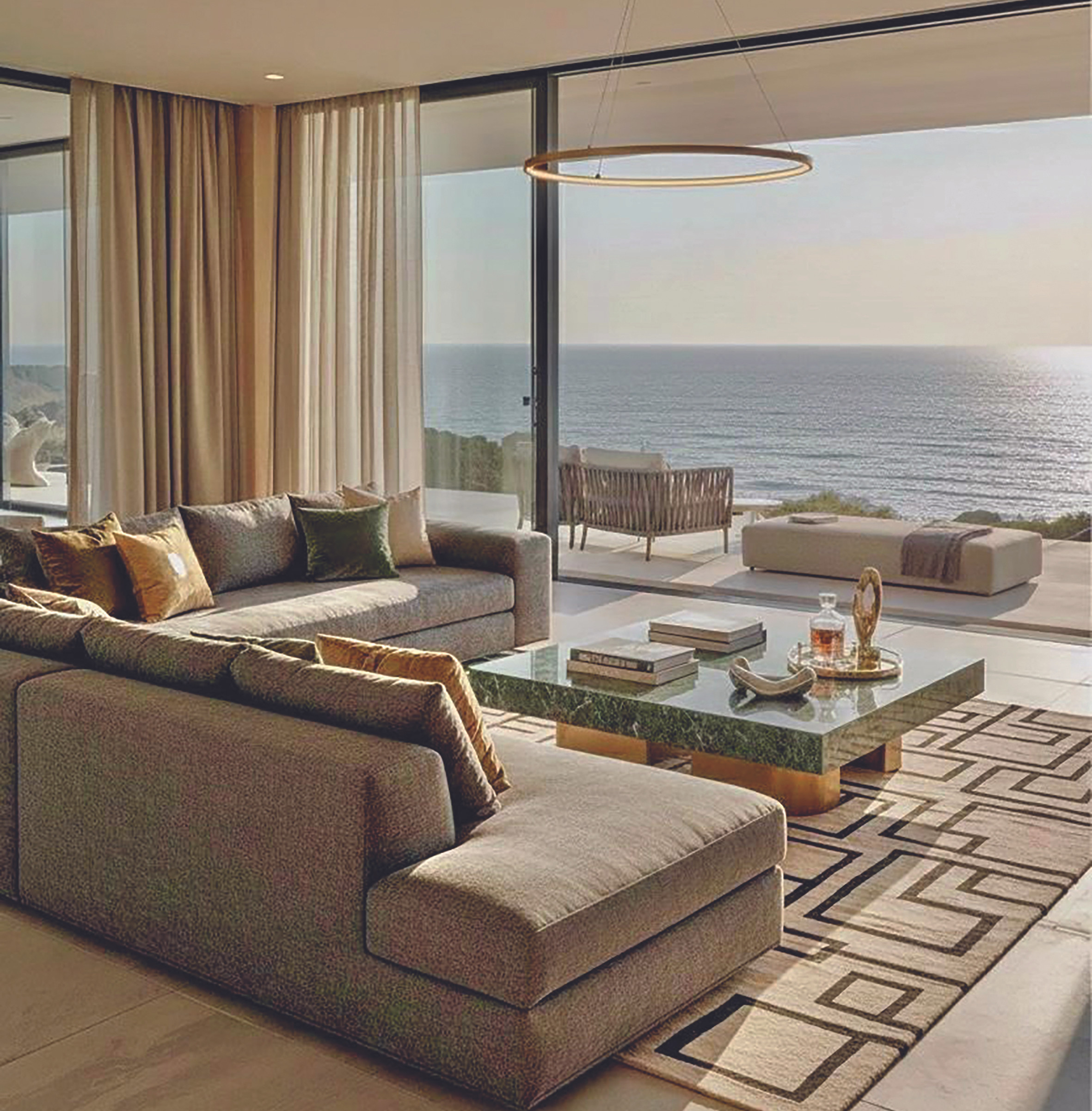
The neighborhood has tremendous views of the Mediterranean and a nearby nature reserve. Residents enjoy the conveniences of a large neighborhood but with a small-neighborhood feeling.
What schools are nearby?
In Netanya, there are both secular elementary and high schools, run by the Israeli government, as well as religious school options. Some families choose schools in Ra’anana, but the majority stay in Netanya.

What other neighborhoods are in the city aside from Ir Yamim?
Ramat Poleg is an older community that began 30 years ago. It features both houses and apartments and has its own shul, which davens Nusach Sephard. They are a wonderful congregation, and our shul does a significant amount of joint programming with them and partners on many community events. They host the men’s community kollel and Matan classes for women.
Kiryat HaSharon is farther inland and tends to be more affordable since it doesn't offer the same sea views. It also has a somewhat younger population and is home to the local religious high school.
What is transportation like?
Netanya is Israel’s fifth-largest city, and enjoys extensive transportation infrastructure. Buses and trains run constantly, giving residents access to robust public transportation in addition to the neighborhood's walkability.
One other thing to mention: Ir Yamim is silent on Shabbat. The neighborhood’s non-religious residents are respectful and since vehicle access to the shore is located closer to Poleg, cars don’t pass through Ir Yamim to reach the beach. (Ir Yamim residents access the beach on foot.)
What is the current real estate market in Ir Yamim?
Current real estate inventory in Netanya ranges from approximately 35,000-60,000 NIS per square meter.
Ir Yamim offers only apartment living. There are still one or two new projects under development in the neighborhood. Construction costs have risen significantly, driven first by higher material costs following COVID and then by increased labor costs since Oct. 7. The construction workforce has also shifted, with less reliance on Arab labor and more international workers, from countries like China and Pakistan.
A typical four-bedroom apartment in Ir Yamim costs around 5.5 million NIS including amenities such as a doorman, pool and gym. Without those amenities, prices are generally just under 5 million NIS. Purchasing an existing property can sometimes offer a slightly lower price.
Most newer buildings in the surrounding neighborhoods don’t offer comparable amenities. Some communities have public pools or gyms that residents can join.
The combination of a welcoming English-speaking community, a growing religious infrastructure, convenient amenities and the Mediterranean setting has helped make Ir Yamim an increasingly attractive place to live. The conveniences of a large, modern neighborhood while retaining the warmth of a smaller community—all with the beach just outside your door—make it, as Gellis says, “perfect.”


Comments